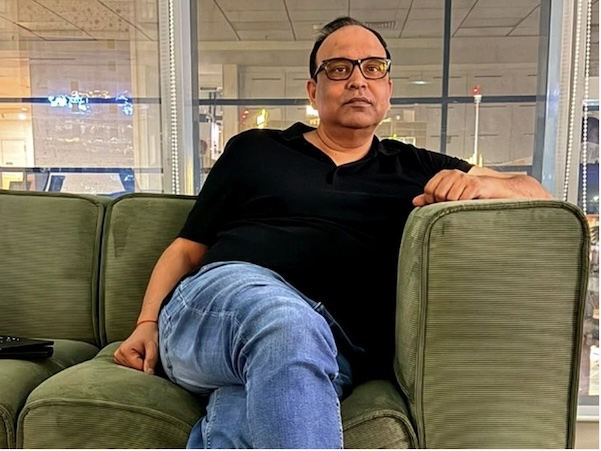
There are businesses one builds because an opportunity appears, and then there are businesses that become the sum of everything life has taught you. ORN is that company for me.
Looking back, I can see that the ideas behind ORN did not begin with ORN. They were shaped over decades — by the places where I lived, the people who came into my life, the companies we built, the mistakes we made, the responsibilities we carried, and the values I learned to hold on to. In many ways, ORN is where all those journeys finally meet.
Where I came from
I grew up in Shimla, in the hills. Perhaps that is where my relationship with places first began. When you grow up surrounded by mountains, weather, silence and changing seasons, you understand early that a place is not simply a geographical location. Places have a personality. They have rhythm. They make you feel something.
Life subsequently took me through Delhi, Kolkata, Hyderabad, Tirupati, Pune, New York and eventually back to Bangalore. These were not simply addresses. Each city exposed me to different people, languages, beliefs, ambitions, food, cultures and ways of understanding the world. Living across such different places taught me something that has stayed with me ever since: the world cannot really be understood from a map, a search result or a list of attractions.
A place is made of people and memory. It is language and faith, landscape and history, food and family, energy and silence. It is the conversations you have, the people who help you, the streets you walk and the moments you carry home. You do not simply visit a place. If you are fortunate, some part of it stays with you.
Over the years I have travelled widely, built businesses across countries and worked with people from very different cultures. The more of the world I saw, the more I came to believe that travel, at its best, is not really about movement. It is about what that movement does to you.
What twenty years of building taught me
My first major entrepreneurial journey in travel was Via.com. At the time, the problem we were trying to solve was very different. Travel distribution in India was deeply fragmented, and we believed technology could connect that ecosystem and make it dramatically more efficient.
Via was backed by Kalaari Capital and Sequoia Capital, and their support gave us the confidence to think at a scale that was unusual for an Indian technology company at the time. What followed taught me one of the most important lessons of my entrepreneurial life.
We did not merely build a website or an online travel company. We built distribution. At its scale, Via reached approximately 3,200 towns and cities across India. My recollection is that close to 85% of the country’s existing travel-agent ecosystem had, in some form, been brought into, connected with or touched by the distribution network we helped create.
But the statistic is not what I remember most. What stays with me is something much more personal. There were very few towns in India where I could walk into a travel agency, introduce myself simply as Vinay, and not find someone who knew Via, knew our people, had worked with us, or knew somebody who had.
That taught me what distribution really means. It is not a map covered with dots. It is thousands of human relationships. It is an agent in a small town trusting your system as much as someone in Mumbai, Delhi or Bangalore. It is people taking your call because you took theirs when they needed you. It is technology amplified by trust and relentless execution. Via taught me that India can be reached at extraordinary depth when technology and relationships work together.
Then came TripFactory. If Via taught me technology, distribution and scale, TripFactory taught me the much harder discipline of operating travel. Through TripFactory and NexusDMC, we built teams, relationships, offices, destination capabilities and operating infrastructure across markets. For the first time, I saw the complete journey not merely as something that could be sold, but as something for which somebody ultimately had to take responsibility.
A traveller sees a flight, a hotel, an itinerary, perhaps a vehicle and a price. Behind that holiday are hundreds of decisions: transportation, accommodation, visas, transfers, guides, supplier relationships, payments, timings, luggage, customer support, disruptions and countless human interventions that the traveller may never know happened. That experience taught me another truth:
Technology can create reach and intelligence. Operations create responsibility.
A beautiful interface cannot help a family if nobody answers when something goes wrong. A brilliant itinerary means little if the vehicle does not arrive. A competitive price means very little if responsibility disappears the moment the customer lands thousands of kilometres from home. I came to believe that the company making the promise should remain connected to the people delivering the promise.
Via taught me scale. TripFactory taught me execution. Destination operations taught me accountability. And somewhere through all of this, I began to understand the company I ultimately wanted to build. But before ORN could exist as a company, there were certain beliefs that had to sit underneath it.
What I believe
The most important of them is very simple: people matter. I believe every person deserves respect, love and care. That includes our families and friends, but it cannot stop there. It includes our colleagues, customers, vendors, partners, drivers, suppliers and the people whose names may never appear on a company website but whose contribution makes everything possible.
I do not believe respect should depend upon hierarchy. I do not believe kindness should depend upon someone’s usefulness to us. A vendor deserves dignity. A colleague deserves dignity. A partner deserves honesty. A customer deserves responsibility. The person driving the vehicle deserves the same respect as the person sitting inside it. And the people who stand beside you when circumstances are difficult should never be forgotten when circumstances become good. For me this is not a customer-service principle. It is a way of living.
I also do not believe that life is simply a by-chance happening. People come into our lives. Opportunities come our way. Responsibilities are placed in our hands. Sometimes we understand immediately why something has arrived; sometimes we understand only years later. But when something comes your way, keep it with care. Do not treat relationships casually. Do not treat somebody’s trust casually. Do not treat an opportunity casually. Do not treat responsibility casually. And if something needs to be done, do it seriously.
That seriousness is especially important in travel. Inside a large organisation, a traveller can easily become one booking among thousands. But to that traveller, the same booking may represent years of savings and anticipation. They may be taking their parents outside India for the first time. Their children may be seeing snow for the first time. A couple may be taking the journey they waited years to afford.
A company sees a transaction. A family may be creating one of the memories of their lives. We must never lose sight of that difference.
Dharma, Faith and Responsibility
My faith has also been one of the quiet anchors of my life. I am a follower of Guru Raghavendra, and the principles of devotion, humility, service and responsibility have influenced the way I understand both life and work. The name itself carries two meanings, because everything in this world has an internal soul and an external body.
For the Internal World
Om Ragvendraya Namah
For the External World
Orchestrating Rhythms of Nature
There is an ancient Sanskrit teaching that captures something very important to me:
धर्मो रक्षति रक्षितः
Dharmo Rakshati Rakshitah.
Dharma protects those who protect it.
I understand dharma here not simply as religion, but as doing what is right; protecting what has been entrusted to you; behaving with integrity even when nobody is watching; treating people fairly; and accepting responsibility for your actions. If you protect trust, trust protects you. If you protect relationships, relationships endure. If you protect people’s dignity, people stand with you. If you protect the promise you make to a customer, eventually that promise becomes your reputation.
Markets change. Companies go through cycles. Money comes and goes. Success is never permanent. But character compounds. When circumstances become difficult, you discover what the real assets of a company are. They are the people who trust you, the colleagues who stand beside you, the partners who take your call, the suppliers who believe you will honour your word, and the customers who know you will not disappear when something goes wrong. That, to me, is dharma in practice.
Were We Useful?
There is another belief that has become stronger as I have grown older. I do not believe we are born simply to become rich or famous. Money is useful. It allows us to build. Capital can turn ideas into infrastructure and create employment and opportunity. Recognition can open doors. But they are poor things to make the purpose of one’s life.
Eventually, all of us leave. Titles disappear. Valuations disappear. Positions disappear. Applause disappears. What remains is a much simpler question: were we useful? Did we make somebody’s life better? Did we protect the responsibilities that came to us? Did we treat people well? Did we create something that continued to help people after we were gone? Did we leave behind something useful?
I would rather build something useful than merely build something famous. And I believe this philosophy can coexist with extraordinary ambition. In fact, I think it demands it. If there is something meaningful that needs to be built, and life has put you in a position to build it, then you cannot hide behind false humility. You have to try.
I believe one can be humble as a human being and absolutely fearless about the work. You can care deeply about people and still demand excellence. You can listen carefully and still make difficult decisions. You can be compassionate without becoming timid. You can have no need to prove your own importance and still be uncompromising about the importance of the mission. When something truly needs to be achieved, it needs to be achieved. That combination — care without weakness, ambition without arrogance, fearlessness without losing humility — is something I want deeply embedded in ORN.
Who stood with me
Nobody builds anything meaningful alone. When I look back at my entrepreneurial journey, one of the things for which I feel most grateful is the quality of the people who chose to walk alongside us.
I have never thought of investors simply as providers of money. Some of the relationships that began through business have become among the deepest relationships in my life. There is affection, honesty, trust, respect and shared history. In some instances, the relationship has gone far beyond a financial partnership and exists at what I can only describe as a soul level.
Vani Kola was our first investor. There is something special about the person who believes before there is enough evidence for everyone else to believe. Vani has seen different chapters of my entrepreneurial life. Companies have changed, circumstances have changed, but the relationship has endured and deepened. I will always remember that she believed early.
T. V. Mohandas Pai sir has been a father figure to me. India has seen few people who have contributed across technology, education, entrepreneurship, public policy and institution building with his breadth and intensity. He is an institution in his own right. But the public stature is not what defines my relationship with him. His guidance, directness, care and willingness to stand beside people have meant enormously to me over the years.
Then there is Dr. Ranjan Pai. Behind the extraordinary scale of Manipal across healthcare and education, and behind his success as an investor in some of India’s most significant new-economy companies, is an amazingly warm and grounded human being. Knowing him has reinforced something I believe very strongly: enormous success and genuine humanity can coexist.
Our relationship with the HCL founding family, including Roshni Nadar Malhotra and Shikhar Malhotra, carries much the same lesson. This is one of India’s most successful business families, yet if you spend time with them you are struck not by wealth or status but by simplicity, accessibility and humility. You cannot always tell from the person sitting across from you the scale of what stands behind them. To me, that says much more about a family than any ranking ever could.
And in the Middle East, Bader Kanoo and the Kanoo family represent generations of institution building. The Kanoo name carries enormous history across the region, yet once again it is the human relationship that matters most to me. Relationships like these are not produced by a transaction or a funding round. They develop slowly through trust, reliability and years of working together.
Some of these relationships go back decades. That continuity is important to me because businesses change, markets change and companies evolve. Relationships built on genuine trust can outlast all of them.
The same truth exists inside the company. My co-founders and colleagues Amit, Varun, Ankit and Ankush have been part of my life for close to two decades. We have built companies together. We have taken risks together. We have disagreed, solved difficult problems, made mistakes, learned, rebuilt and moved forward.
But what matters to me most is not simply that we have built businesses together. It is the respect. The care. The trust. The ability to disagree without losing affection. The ability to be fearless together and still remain humble as individuals. Over twenty years, people inevitably see one another at their best and at their worst. That is what gives long relationships their depth. Eventually you stop relating to titles or current success and understand the human being underneath.
Great companies are rarely created by assembling impressive résumés. They are created by people who trust one another enough to attempt very difficult things together. Money can help a company grow. Technology can allow it to scale. Infrastructure can make it stronger. But trust is what allows people to build something difficult together for decades.
What ORN is today
All of those chapters converge in ORN. ORN.com has made a deliberate choice to focus purely on Europe Journeys.
Europe fascinates me because it contains so many worlds within relatively short distances. In one journey, a traveller can move from Paris to the Swiss Alps, from an Italian village to an Austrian lake, from Amsterdam’s canals to the landscapes of Scotland. Languages, food, architecture, history, terrain and ways of life can change within hours.
That richness is what makes Europe extraordinary. It is also what makes Europe complicated. A European holiday may involve several countries, hotels, flights, trains, transfers, local transportation, visas, sightseeing, luggage, guides and many different suppliers. The customer is often expected to somehow make these separate pieces behave like one journey. After everything I had learned through Via, TripFactory and destination operations, one question kept returning:
Who is actually looking after the traveller once they land?
ORN is being built around that question. And importantly, ORN today is not merely an idea or a beautiful technology vision waiting for reality to arrive. There are real people behind it. There are real offices. There are real coaches and Mercedes vans. There are destination teams and supplier relationships. There are people answering phones, managing movements, negotiating inventory and solving problems. There is technology connecting different parts of the operation. There is infrastructure in the physical world.
ORN in the Real World
People. Offices. Infrastructure.
Across Europe, India, the Middle East, Asia-Pacific, the United States and South America.